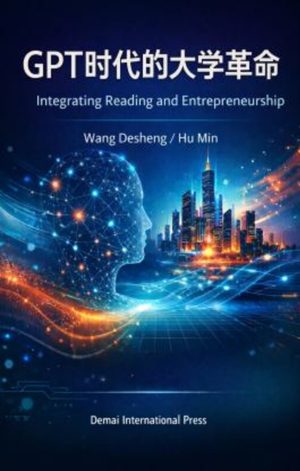
在 GPT 与生成式 AI 迅速改变「知识如何被创造、组织与应用」的时代,大学再也无法维持它旧有的样子。本书主张:高等教育面临的危机,并不只是课程过时、创新项目薄弱或行政低效的问题,其核心是一场制度身份的危机。旧大学是为「知识门槛很厚」的时代建的——那时获取思想、正式表达、学科语言与体系建构,都需要漫长而昂贵的训练;AI 已经开始压缩这些门槛。于是大学必须重新定义自己的角色,否则将逐步失去它作为文明上游器官的历史位置。
本书给出一个大胆的回答:未来的大学,必须从知识的看门机构,演化为知识平台、创业母机与数字身体。这一转型的中心是一个新的教育公式——把阅读与创业焊接起来。阅读不能再脱离真实问题、真实用户、真实系统;创业也不能再是没有深层结构、严谨思考与概念根基的浅层市场即兴。未来的大学,必须成为「阅读生成系统、而系统建构又驱动更深阅读」的地方。
融合哲学、教育、软件逻辑、平台思维、组织设计与文明分析,本书从头重新想象大学:探讨课程如何成为「路径生成」的环境,博士训练如何越过「资格劳动」而产出知识与系统的母体,教授如何日益成为「教授—工程师—创业者」三位一体的角色,以及软件管线、中台与平台资产如何赋予大学一个新的运行身体。这不止是一部教育改革之作,更是一本关于「未来如何被重新组织」的书。它写给教育者、大学领导者、研究者、平台建造者、政策制定者,以及一切在 AI 时代寻找新路的年轻人:它追问的不只是大学该如何回应变化,而是——若要帮助建造文明的下一阶段,大学必须成为什么。
本书全文尚未上线。下面三篇选自王德生 2025 年前后的专著原稿《科学发生学:从发现幻觉到SIO模型化》、《三律治理学:政治、管理和法律的解构与重建》,可以先读。
壹基于 GPT 的大学科研典范重生约 1.9 万字 · 2025-08-05GPT的出现,正在深刻改变大学科研的基本结构逻辑。它不仅带来“效率提升”或“工具升级”,而是引发一场本体性的冲击:大学科研的“发现范式”“学科划界”“成果产出”“评价体系”正被系统性动…… 贰西方文明的知识权力暴政约 4.4 万字 · 原载「三二一智慧」2025-03-19米歇尔·福柯(Michel Foucault)在其著名的“知识—权力”(Knowledge-Power)理论中深刻阐明了知识与权力之间的密切关联。 叁学科知识的救赎:回到 SIO 本体论约 1.1 万字 · 原载「三二一智慧」2024-07-29在当今高度分化和专业化的知识体系中,学科知识在解决现实问题中的“软弱无力”愈加凸显。面对日益复杂的全球性挑战,如气候变化、公共健康危机、社会不平等等,传统的学科知识体系显得力不从心。In an age when GPT and generative AI are rapidly transforming how knowledge is created, organized, and applied, the university can no longer remain what it once was. The University Revolution in the GPT Era argues that the crisis facing higher education is not simply a matter of outdated curricula, weak innovation programs, or inefficient administration. At its core, it is a crisis of institutional identity. The old university was built for an era of thick knowledge thresholds, when access to ideas, formal expression, disciplinary language, and system-building required long, costly training.
AI has begun to compress those thresholds. As a result, the university must now redefine its role or gradually lose its historical position as an upstream organ of civilization. This book offers a bold answer: the future university must evolve from a gatekeeping institution of knowledge into a knowledge platform, an entrepreneurial mother-machine, and a digital body. At the center of this transformation is a new educational formula: integrating reading and entrepreneurship.
Reading can no longer remain detached from real problems, real users, and real systems. Entrepreneurship can no longer remain shallow, market-driven improvisation without deep structure, rigorous thought, and conceptual grounding. The university of the future must become the place where reading generates systems, and system-building drives deeper reading. Bringing together philosophy, education, software logic, platform thinking, organizational design, and civilizational analysis, this book reimagines the university from the ground up.
It explores how courses can become pathway-generating environments, how doctoral training can move beyond qualification labor to produce mother-bodies of knowledge and systems, how professors must increasingly become professor-engineer-entrepreneur figures, and how software pipelines, middle platforms, and platform assets can give the university a new operational body. More than a work of educational reform, this is a book about the reorganization of the future. It speaks to educators, university leaders, researchers, platform builders, policymakers, and young people searching for a new path in the AI era. It does not merely ask how universities should respond to change.
It asks what a university must become if it is to help build the next stage of civilization.