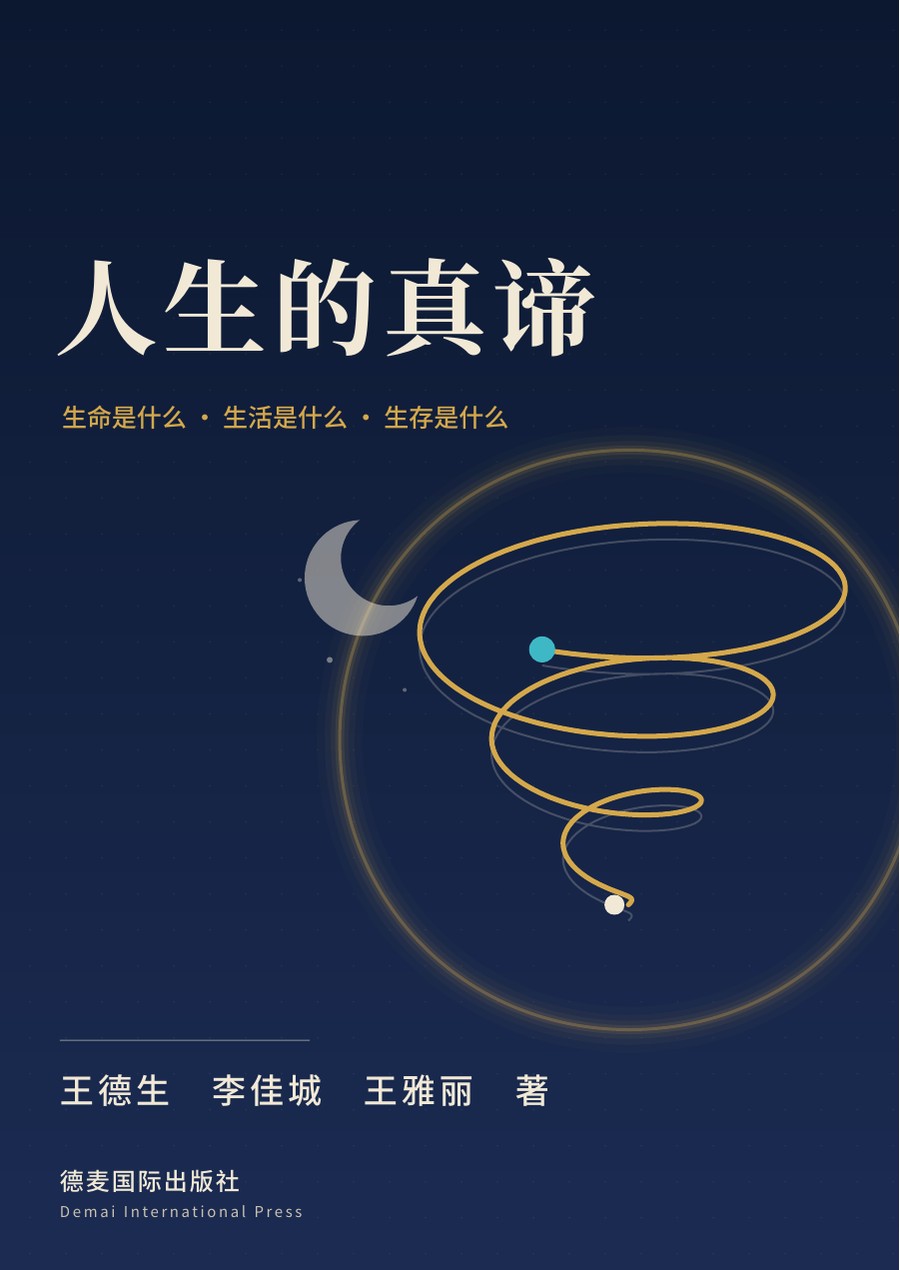
几千年来,关于人生的叹息几乎无处不在——古人说「浮生若梦」,佛家讲「诸行无常」,现代思想家直言「存在是荒诞的」。这声叹息之所以反复回荡,是因为它抓住了人的脆弱:生命短暂,仿佛幻影;命运无常,努力似乎总被看不见的力量戏弄;日常里,教育、健康、事业的口号充斥耳边,却往往空洞无物。于是人们说:人生不过一场梦。本书要正面反对这句话,并给出一个证明:人生不是梦。
本书的回答来自一个新的哲学框架——SIO 发生学。它不把主体、互动、客体看作孤立的存在,而看作在统一中生成的整体。由此,人生最古老的三问被重新回答:生命是什么——生命是真实的整体生成,可以发生、可以重来、可以再发生(梦中的飞翔不留足迹,梦中的盛宴不带来饱足,只有真实的整体发生才是生命);生活是什么——生活是真实的差异显影,每一次「不懂」、每一次「尝试」、每一次「感动」都是生活的发生,它会沉淀为经验、刻进记忆与文化;生存是什么——生存是真实的特征纠缠网络与能量循环,需要输入、依靠维系、还会释放。
循着这三问,全书分三编展开。生命编解构「假大空的生命观」,也解构康德与乔姆斯基那种把生命写成先验剧本的宿命,指出命运不是被写好的脚本,而是可被重新发生的过程。生活编回答「何谓健康的生活」:健康不在饮食、习惯或心态的口号里,而在差异能否在三种逻辑上运转——形式逻辑编织方向,发展逻辑提供动力,发生逻辑带来新生。生存编把学习立为生存的核心——学习力就是生存力:一个不会学习的人生存空间极窄,一个善于学习的文明能穿越千年;并借「中庸」揭示文明长久的秘密与新生的困境——中庸维持了特征纠缠使文明延续,但缺了生成逻辑,就会陷入停滞。
三编统一,收束于一个价值论的宣言:梦是循环与消散,人生是螺旋与累积;梦不创造、不幸福、不自由,人生却能创造、能释放幸福、能扩展自由;梦无遗产,人生有文明。人生的真谛,就在于它能创造、能幸福、能自由,三者螺旋交织、不断上升。本书为人生重建了哲学的根基——本体论上,人生是整体、差异与纠缠的统一;方法论上,生活要运行在三逻辑之中;价值论上,人生是创造、幸福、自由的螺旋上升。它与本站据本书写成的三篇长文《人生不是梦》《健康,不是那些口号》《学习力就是生存力》同源。
全书已上线(2026 年 9 月修订版)。下面是开篇文、七章与压尾文,点开即读网页全文;也可以在线翻页或下载 PDF。
壹开篇文 人生真谛之三问约 2.2 万字 · 全文网页版在人类思想史的无数次追问中,“人生是什么”始终是一道无法绕开的命题。 贰第 1 章 教育、健康、事业上的“假大空生命观”约 2.4 万字 · 全文网页版在当下的社会语境中,关于生命的讨论几乎无处不在。 叁第 2 章 命运的发生学解构约 4.0 万字 · 全文网页版在人类文明的叙事史中,“命运”几乎是最古老又最顽固的主题。 肆第 3 章 命运之手:康德和乔姆斯基的梦想破灭约 0.6 万字 · 全文网页版本文在系统重读《命运的发生学解构》的基础上,以其SIO(主体—互动—客体)发生学框架为理论中枢,对伊曼努尔·康德先验哲学与诺姆·乔姆斯基“普遍语法”(UG)进行批判性解构。 伍第 4 章 何谓健康的生活?约 3.3 万字 · 全文网页版当今世界,人人谈健康,人人渴望长寿,人人希望自己活得轻盈自在。 陆第 5 章 为何健康的生活必须运行在 SIO 三逻辑上?约 1.3 万字 · 全文网页版“健康的生活”常常被简化为若干习惯、饮食与心态的口号,但这些说法都未触及生活的本体。 柒第 6 章 生存的智慧内核:学习约 4.2 万字 · 全文网页版在人类漫长的历史中,财富的堆积曾经辉煌,疆域的扩张曾经耀眼,武力的强盛曾经震撼。 捌第 7 章 中庸与中华文明:长久的秘密与新生的困境约 2.0 万字 · 全文网页版在中华文明数千年的历史中,《中庸》所代表的思想体系,一直是支撑文明长久的重要智慧。 玖压尾文 人生不是梦约 1.0 万字 · 全文网页版当代人的心灵深处,常常萦绕着一句叹息:“人生如梦,最后一切归于虚空。The True Meaning of Life confronts one of humanity's oldest questions with a new philosophical clarity: if life is so fragile, uncertain, and finite, why does it continue to generate meaning rather than dissolve into illusion? Against the familiar refrain that "life is a dream," this book offers a firm counterclaim — life is real because it happens, accumulates, and transforms.
The book is structured around three fundamental questions: What is Life? What is Living? What is Survival? Instead of treating them as abstract themes, it rebuilds them as three inseparable dimensions of human existence. Life is understood as an integrated whole, a continuous process rather than a static essence. Living is the visible differentiation of this whole, where change, variety, and daily experience take form. Survival is the network of forces and tensions that sustain movement over time, providing real momentum rather than mere endurance. Together, these three dimensions form a single generative structure rather than competing explanations.
Drawing on a "genetic" or generative philosophy, the book challenges two dominant modern illusions. One reduces life to fate or pre-written destiny, stripping individuals of freedom. The other replaces depth with empty slogans — about education, health, success, or positivity — that soothe anxiety while eroding reality. The True Meaning of Life rejects both. Meaning, it argues, does not come from accepting destiny or repeating comforting words, but from understanding how life actually generates structure, difference, and power.
At the heart of the book is a unified framework that links feature formation, freedom of choice, and the emergence of happiness. Meaning rises when differences stabilize into recognizable patterns, when choices open new paths, and when tension is released through transformation rather than suppression. From this perspective, happiness is not illusion or reward, freedom is not abstraction, and creation is not privilege — they are measurable outcomes of life's real operation.
Philosophical yet grounded, this book speaks across traditions, engaging Eastern wisdom, Western philosophy, religion, and modern science without collapsing into any single worldview. It ultimately offers a clear conclusion: the true meaning of life is not a final answer, but a continuous ascent — through creation, happiness, and freedom — within living reality.
下面三篇「今日长文」各约五千字,分别取本书的三编——生命编、生活编、生存编——展开细读,对应人生三问:生命是什么、生活是什么、生存是什么。可各自独立阅读,也互为呼应。